What inspired you to start writing this book?
The inspiration for Outside Eden’s Gate: A Shadow Falls came largely from the world around me. The current political climate and the constant barrage of news left me asking a simple question: How do we know what is true?
We’re exposed to an overwhelming amount of information every day, much of it contradictory. Deciding which sources to trust and where to look for truth has become increasingly difficult. Along the way, I watched friends and acquaintances become drawn into conspiracy theories and ideological rabbit holes that, from my perspective, led them further away from reality rather than closer to it.
Those observations sparked both frustration and curiosity. I began wondering how easily belief can be shaped, manipulated, or weaponized, and what happens when people lose faith in shared truths. Rather than continuing to argue about those concerns on social media, I channeled them into a thriller. The novel became a way to explore questions about truth, power, faith, and influence through a compelling story.
Tell us the story of your book’s current title. Was it easy to find, or did it take forever?
The title emerged as the story itself evolved. As I began incorporating religious themes and exploring the origins of the novel’s AI antagonist, known as “The Shadow,” I found myself drawn to the idea of humanity existing outside Eden’s gate.
In Judeo-Christian tradition, humanity lives in a world beyond Eden, separated from a lost paradise. That image resonated with me because it reflects a universal human struggle: the search for meaning, the hardships we endure, and the longing for something better than the world we inhabit. Those ideas became central themes in the novel.
Although the book engages with religious concepts and symbolism, it is not intended as a religious novel. Instead, it uses elements of faith, mythology, and theology as tools to explore larger questions about human nature, power, free will, and the future of our species. Along the way, it challenges some traditional assumptions and interpretations, which may make certain readers uncomfortable, but that tension is very much part of the story’s purpose.
Describe your dream book cover.
A weathered leatherbound look with the illustration in colored foils. Might do this for the hardcover!
If your book had a soundtrack, what are some songs that would be on it?
My musical taste is all over the map, which makes this a difficult question to answer! I’m a lifelong rock fan, so the soundtrack would definitely include bands like Led Zeppelin, Rush, AC/DC, and The Rolling Stones. On the more contemporary side, I enjoy artists such as Imagine Dragons and Coldplay.
If we’re venturing into classical music, I’d include Vivaldi’s “The Four Seasons” and Beethoven’s “Jupiter Symphony,” which has an uplifting grandeur that feels timeless. And for something completely different, I’d have to throw in a little Dave Brubeck. His music has a creativity and energy that never gets old.
In the end, the soundtrack would probably be as eclectic as the novel itself. I enjoy discovering connections across different genres, eras, and styles, so the playlist would be a mix of powerful rock anthems, sweeping classical pieces, and a few unexpected selections along the way.
What books are you reading (for research or comfort) as you continue the writing process?
I’m usually reading a mix of classics and contemporary fiction. Recently, I revisited several books that have stayed with me over the years, including 1984, A Clockwork Orange, and Ender’s Game. I also enjoy discovering work from independent authors and recently read All the Numbers and Deus Deceptor.
One of my longtime favorites is Wizard’s First Rule by Terry Goodkind. What ties many of these books together is their exploration of themes I find endlessly fascinating: dystopian societies, science fiction, rebellion against powerful forces, and the complex relationship between truth, power, and belief. Whether they’re set in the future, an alternate reality, or a fantasy world, I’m always drawn to stories that challenge assumptions and ask difficult questions about the world we live in.
What other professions have you worked in? What’s something about you that your readers wouldn’t know?
Before becoming a novelist, I spent my career as an artist and creative professional. Over the years, I’ve had the opportunity to work across a wide range of industries, including television, military simulation, and video games. Those experiences allowed me to wear many different hats and contribute in a variety of creative and technical roles.
Along the way, I was fortunate enough to work on several well-known games and animated productions, collaborating with talented people who shared a passion for storytelling and world-building. Looking back, each chapter of my career taught me something valuable about creating immersive experiences, whether through visuals, technology, or narrative.
In many ways, writing novels feels like a natural extension of that journey. The tools are different, but the goal remains the same: to transport audiences into compelling worlds and tell stories that stay with them long after the experience is over.
Who/what made you want to write? Was there a particular person, or particular writers/works/art forms that influenced you?
I’ve wanted to write for as long as I can remember, but life took me down a different creative path. After spending years building a career in television, video games, and animation, I finally reached a point where I had the time to sit down and learn what it takes to write a novel from beginning to end.
What fascinates me most about writing is the freedom it offers. As an author, you have enormous creative control over the worlds you build, the characters you create, and the questions you choose to explore. There is something deeply rewarding about starting with a blank page and gradually shaping an entire story.
Like most writers, I’ve been influenced by everything I’ve read. Some of those influences go back to high school, when I first became immersed in Tolkien’s epic fantasy worlds. Others came from books I was assigned and probably would never have picked up on my own, such as The Mayor of Casterbridge and To Kill a Mockingbird. Each left its mark in different ways. Beyond books, I’ve also absorbed inspiration from hundreds of thriller, science fiction, and horror films over the years.
More recently, I’ve been intrigued by the way we consume information in the digital age. Social media delivers stories in rapid, fragmented bursts, with our attention constantly shifting from one thread to another. That influenced the structure of Outside Eden’s Gate: A Shadow Falls, which uses short chapters and multiple perspectives to create a fast-moving narrative. One reviewer described the experience as a “kaleidoscope,” which I thought was a wonderful way to capture the style I was aiming for.
Where is your favorite place to write?
I have a very unromantic answer to this question: I only write in one place, at home, on my computer, usually late at night. That’s when I’m most focused and able to lose myself in the story. I rarely write by hand anymore, except when an idea strikes unexpectedly and I need to jot it down before it disappears.
That said, inspiration isn’t tied to my desk. Wherever I go, whether I’m walking around my city, hiking a trail, or traveling somewhere new, part of my mind is always observing and imagining. I’m constantly thinking about how a particular location, atmosphere, or chance encounter might find its way into a future story.
So, while the actual writing happens in the same place, the ideas come from everywhere. The world is full of interesting settings, characters, and possibilities. As a writer, you never really stop collecting them.
What advice would you give your past self at the start of your writing journey?
If I could go back and give myself one piece of advice before starting this book, it would be simple: start sooner.
Writing a novel is challenging, and there were certainly moments of doubt along the way, but the process was also far more enjoyable and rewarding than I expected. What seemed overwhelming at first became manageable one chapter, one scene, and one revision at a time.
The bigger surprise was discovering that writing the book is only half the journey. Finishing a manuscript feels like reaching the summit, only to realize there’s another mountain beyond it. Marketing a novel, finding readers, and building an audience can be every bit as demanding as the writing itself.
Still, I wouldn’t change the experience. Writing Outside Eden’s Gate: A Shadow Falls taught me that the hardest part is often taking the first step. Once you begin, the story has a way of pulling you forward.
What’s one thing you hope sticks with readers after they finish your book?
More than anything, I hope readers finish Outside Eden’s Gate: A Shadow Falls asking questions.
We live in a world flooded with information, competing narratives, and people who claim to possess the truth. Yet the deeper you look, the more you realize how difficult it can be to separate fact from manipulation, certainty from belief, and truth from illusion. The novel explores that uncertainty through a fictional lens, but the questions it raises are very real.
I want readers to consider the possibility that there are forces shaping events around us whose motives may not be what they appear. History has always contained hidden agendas, competing interests, and individuals willing to pursue power through deception. The challenge is determining what is true, what might be true, and what could become true if we fail to question the stories we are told. If the book leaves readers entertained while also encouraging them to think more critically about information, authority, and the nature of truth itself, then I feel it has accomplished its purpose.
 An Interview with M. LaRose, author of Lost in the Hall of the Mountain King
 An Interview with Kara Jacobson, author of Lady Ghost
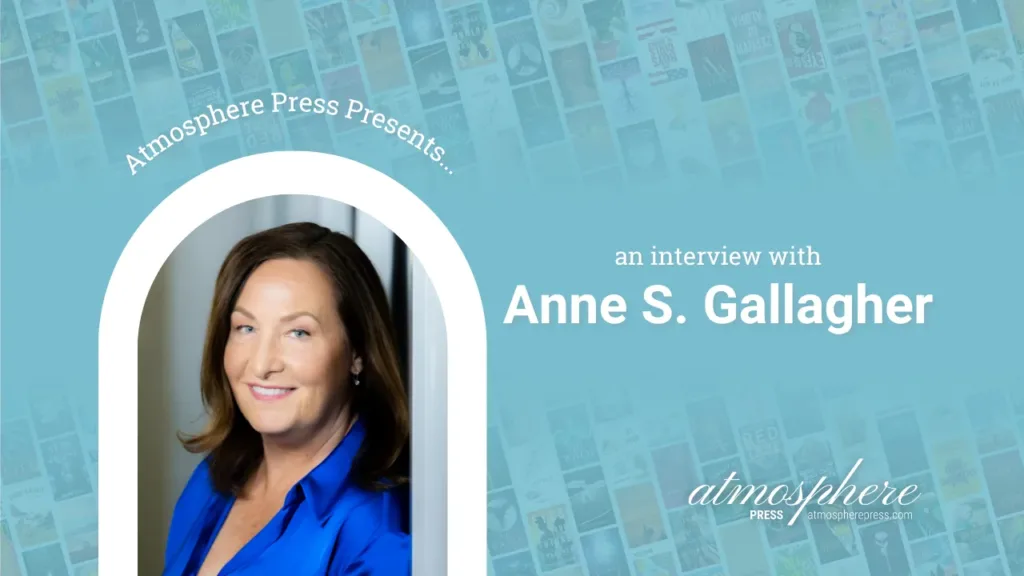 An Interview with Anne S. Gallagher
 An Interview with A. E. Jones