An Interview with Deborah Holman
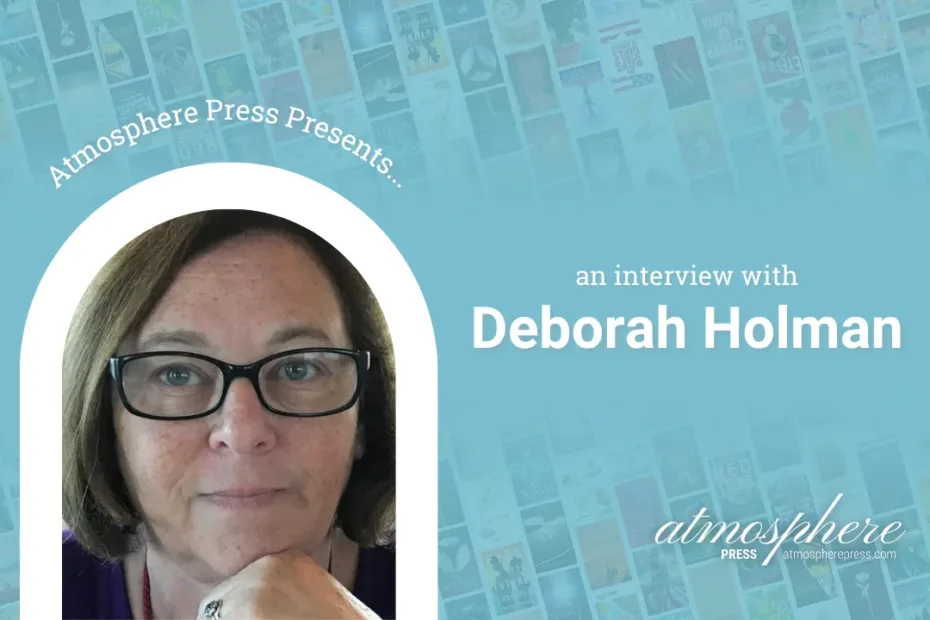
Deborah S. Holman is an award-winning author, genealogist, and educator whose passion for uncovering forgotten lives inspires her writing. Her books combine original historical research with compelling storytelling, inviting readers to discover the people behind the records.
She is the author of the Richard G. Tomlinson Literary Award-winning Nothing Really Bad Will Happen, Doris’s New Home, and the genealogy blog Who We Are and How We Got This Way. Through her books, lectures, and educational programs, she encourages others to preserve and share the stories that shape families and communities.
Who/what made you want to write? Was there a particular person, or particular writers/works/art forms that influenced you?
I always enjoyed writing—even the reports related to my career as a special education teacher. But it wasn’t until 2007, when I co-authored a reference book on a line of dollhouse furniture, that I realized the joy of sharing my knowledge with others. Following that book, I wrote and self-published several books just for family about our history. In 2024, I published my first novel, Nothing Really Bad Will Happen, an account of my family’s experience during and after the Holocaust. There are, of course, many books about that dark period, but few focus on the lives of ordinary people. I wanted to share the story of my mother’s Viennese Jewish family so people might have a better understanding of what it was like to live there in the early years of Hitler’s regime, to lose everything, and what it took to rebuild new lives in a new country.
What inspired you to start writing this book?
My current book, Countess of Cons: The Story of a Gilded Age Grifter, focuses on the life of my husband’s great-grandmother. Divorced by her husband in 1889 Kansas City, Missouri, Cathrine Seeley turned to crime at the age of fifty. I discovered this information quite by accident, while researching the family history. As I learned more about her, I found her story fascinating and, at times, hilarious. I couldn’t not share it with the world!
Tell us the story of your book’s title. Was it easy to find, or did it take forever?
Originally, I wrote Catherine’s story as a nonfiction account, just for family. I titled it Opulent in Aliases, taking the title from a newspaper article about her activities. I fully intended to use the same title for this creative nonfiction version, but a few members of my writing group talked me out of it! I’m still a little sad about that. Landing on the right title felt like it took forever. I workshopped different titles, used AI for inspiration, and asked pretty much everyone I knew for their opinion. Hopefully, I made the right decision!
If your book had a soundtrack, what are some songs that would be on it?
I don’t have a good memory for song titles, but the first one that comes to mind is Take The Money And Run!
What other professions have you worked in? What’s something about you that your readers wouldn’t know?
Other than a few assorted jobs in retail in my youth, I was a special education teacher for thirty-seven years. I worked primarily with high school-age students who struggled with learning and emotional issues. As a woman who stands only four foot nine tall, that provided me a lot of funny moments (which I would write about, but it would probably get me sued!) Aside from my lack of height, readers wouldn’t know that my family was saved by a hamster in 1997.
What books did you read (for research or comfort) throughout your writing process?
I read several books in the creative nonfiction arena—Devil in the White City, The Five, and We Were the Lucky Ones, are a few that helped inform my style. Tons of blogs, newsletters, and websites about writing (I think that’s how I discovered Atmosphere Press), and a bunch of craft books like Understanding Show, Don’t Tell (And Really Getting It) by Janice Hardy.
What advice would you give your past self at the start of your writing journey?
There is no “right way” to write! Embrace your style and don’t waste time trying to emulate the style of others.
What’s one thing you hope sticks with readers after they finish your book?
You can’t judge people solely by their actions. Try to understand the reasoning behind the choices they made.
Are you a writer, too? Submit your manuscript to Atmosphere Press.
Atmosphere Press is a selective hybrid publisher founded in 2015 on the principles of Honesty, Transparency, Professionalism, Kindness, and Making Your Book Awesome. Our books have won dozens of awards and sold tens of thousands of copies. If you’re interested in learning more, or seeking publication for your own work, please explore the links below.