What inspired you to start writing this book?
A Tale of Three Cities has been with me for at least fifteen years. It started with an image – a rain of blood falling upon a hushed night city – and grew by accretion, other images attaching themselves to it. So, I had a very vivid dreamscape but no plot and only a vague idea of who the protagonist would be. I knew she would be a complicated character – not a selfless savior or a sympathetic victim but a bad person who does good almost in spite of her own nature. I wanted her to reflect collective traumas of history, not just individual misfortunes. She would be seeking the truth about herself as much as she would be looking for the truth about her strange city. And I wanted to write about the dangers of fanatical belief and unbending self-righteousness. And so, Mara Raven was born. Any novel soaks up its cultural environment, and you can see how my novel both reflects the moment we live in and the historical road that has brought us here. It took me a long time to put together all the pieces of the puzzle – the dream-sea, the lonely city threatened with an apocalypse, the peculiar religion that reflects, in a very distorted way, the origin of the city – but eventually I did it. And then Mara Raven became the thread that binds it all together.
Tell us the story of your book’s current title. Was it easy to find, or did it take forever?
The title is a homage to Charles Dickens’ A Tale of Two Cities, which is the greatest novel of the revolution ever written. My novel is not set in a quasi-Victorian world, and its characters are not modeled on Dickens but I hope that its imagery and its message resonate with the Dickensian original.
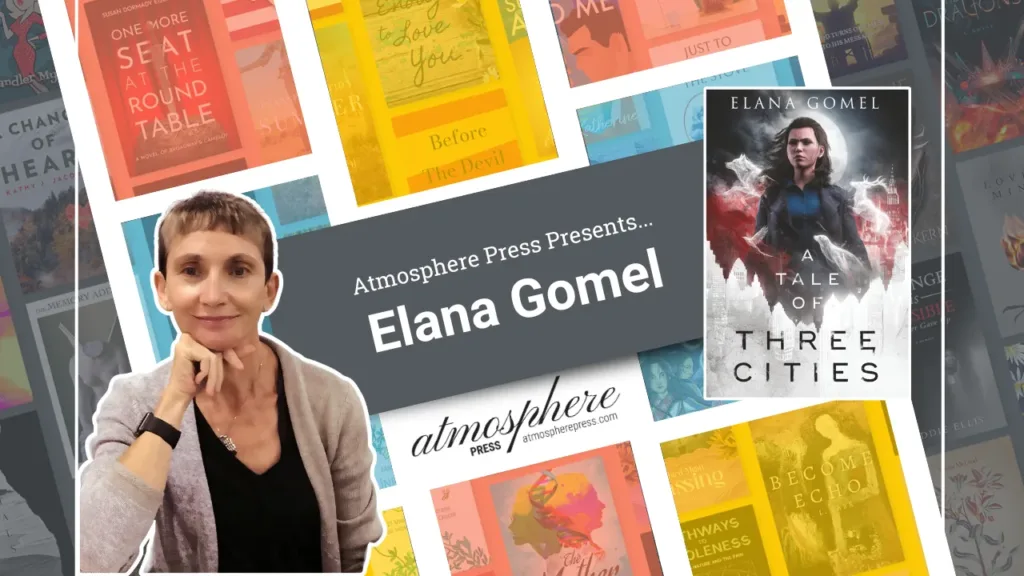
Describe your dream book cover.
The current book cover is pretty much it. Of course, if it were up to me, I would create an entire video to accompany A Tale of Three Cities. My imagination is primarily visual, so I always have a sort of reel unfolding in my head as I write. Perhaps with the modern tools it will be possible to do that.
If your book had a soundtrack, what are some songs that would be on it?
I am not a particularly musical person, but since the world of the novel is modeled on the mid-twentieth century, how about War Requiem by Benjamin Britten or Carmina Burana by Carl Orff?
What books are you reading (for research or comfort) as you continue the writing process?
I am an academic, so reading is basically what I do. My next published novel will be sci-fi and biopunk, so I am reading more in these genres. Right now, I am reading Adrian Tchaikovsky and rereading some older space operas by Alastair Reynolds and Gregory Benford.
What other professions have you worked in? What’s something about you that your readers wouldn’t know?
I am an academic, specializing in narrative theory, so my entire life has been about stories and storytelling. I taught in several countries, and all of my novels reflect my multicultural background.
Who/what made you want to write? Was there a particular person, or particular writers/works/art forms that influenced you?
I told stories to myself since before I could read. And since I was a fluent reader by the age of five, it would be hard to pinpoint my moment of origin as a writer. Still, some writers obviously deeply impacted me, especially Dickens (who is one of my academic specialties) and the Polish SF writer Stanislaw Lem.
Where is your favorite place to write?
Sorry, I wish I was more original, but it is actually my desk. On the positive side, I see beautiful redwoods out of my window.
What advice would you give your past self at the start of your writing journey?
Don’t be afraid. Write what you want to read, not what other people like.
What’s one thing you hope sticks with readers after they finish your book?
The imagery of the dream-sea. We all have our own dream-sea that we go to when we close our eyes. I hope yours has the common border with mine.
 An Interview with M. LaRose, author of Lost in the Hall of the Mountain King
 An Interview with Kara Jacobson, author of Lady Ghost
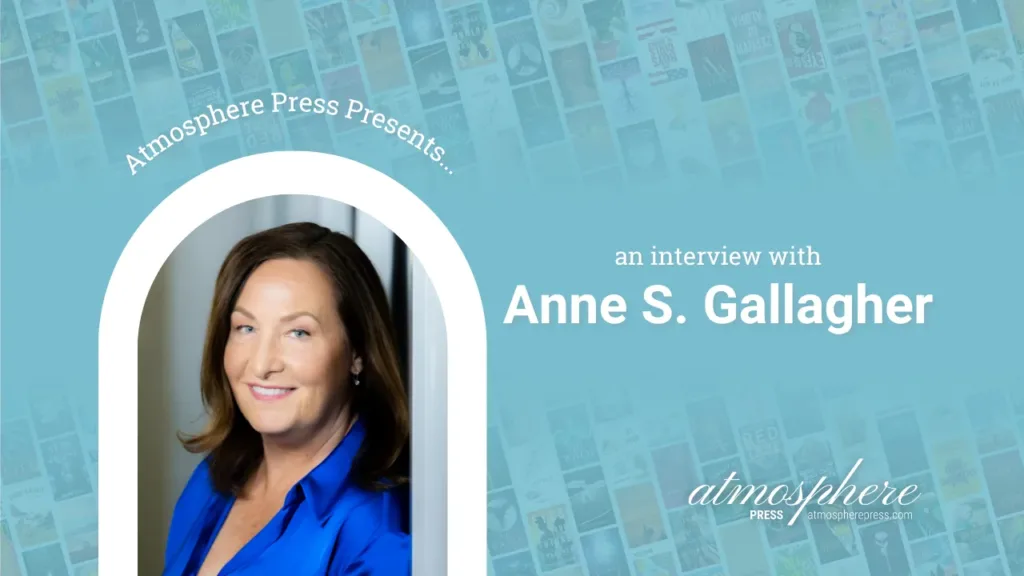 An Interview with Anne S. Gallagher
 An Interview with A. E. Jones