An Interview with Elena Dalla Benetta
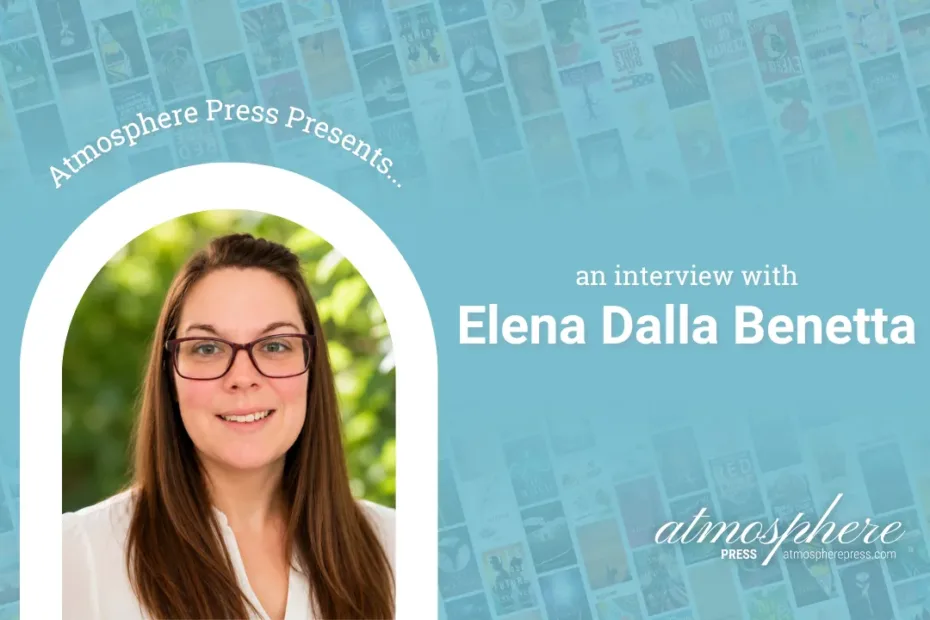
I am a molecular biologist, a storyteller, and, above all, someone who has always been curious about how the world works.
I was born and raised in Italy, and my journey eventually took me beyond Italy’s borders. I lived and worked in Germany and the Netherlands before moving to the United States for my professional career. Each place has shaped me in a different way, but one thing has remained constant throughout my journey: my fascination with science and my love of stories.
As a scientist, I have always been amazed by the invisible world of cells, genes, and molecular processes—the extraordinary mechanisms that make life possible. But I have also learned that some of the most fascinating scientific ideas can feel complicated or intimidating when they are explained only through technical language.
That is where my two passions come together.
I love creating stories for children that turn scientific concepts into something they can imagine, explore, and enjoy. I believe that curiosity often begins with a simple question: What if? A story can open that door and make children feel that science is not something distant or difficult, but something full of wonder and possibilities.
What inspired you to start writing this book?
The inspiration for BioPort Adventures: The Secret of the Super Plant came from two very important parts of my life: my children and my work as a scientist.
Over the years, I have had the opportunity to visit schools and talk to children about what I do as a molecular biologist. I quickly discovered how naturally curious children are when you give them the opportunity to explore science. They ask wonderful questions, make unexpected connections, and are not afraid to imagine possibilities that adults might overlook.
My own children have been an equally important source of inspiration. Their curiosity and the way they look at the world have reminded me that even complex scientific ideas can become fascinating when they are presented through a story, a mystery, or an adventure.
During my school visits, I often found myself thinking: How can I take this curiosity beyond the classroom? How can I make children feel that science belongs to them too?
That question eventually became the seed for BioPort Adventures. I wanted to create a story where children could become immersed in an adventure while, almost without realizing it, discovering fascinating ideas from biology and genome editing.
BioPort Adventures is envisioned as a series of books, with each adventure exploring a different application of genome editing and its incredible potential. My goal is to introduce young readers to technologies that are already changing the way we think about biology and that have the potential to shape our future.
For me, these books are not about teaching science through a textbook. They are about opening a door to curiosity and imagination. I hope each adventure will inspire children to ask questions, dream about possibilities, and see science not simply as something they learn in school, but as a powerful tool for understanding—and perhaps shaping—the world of tomorrow.
Tell us the story of your book’s current title. Was it easy to find, or did it take forever?
The title came together as I was developing the idea for the book and, eventually, for the entire series.
I wanted the series title, BioPort Adventures, to immediately suggest a place where biology, discovery, and adventure come together. “BioPort” is imagined as a gateway into the fascinating world of biotechnology—a place where young readers can step into scientific ideas through the excitement of a story.
For the first book, I wanted the title to capture both the mystery and the science at the heart of the adventure. The Secret of the Super Plant felt like the right combination. “The Secret” creates a sense of curiosity and invites readers to ask, “What is so special about this plant?” And “Super Plant” gives a young reader an immediate sense that something extraordinary is about to be discovered.
I also wanted the title to be accessible to children without giving away too much of the science behind the story. The scientific concepts can be complex, but the adventure should feel simple, intriguing, and fun.
So, surprisingly, the title did not take forever to find. It felt like the story itself was pointing us toward it. And as the idea for the BioPort Adventures series grew, the title became even more meaningful; each book will open the door to a new scientific adventure and explore a different application of genome editing and the technologies that have the potential to shape our future.
Describe your dream book cover.
My dream book cover would immediately transport young readers into the world of BioPort Adventures—a place where science, imagination, and adventure come together.
For The Secret of the Super Plant, I wanted the cover to feel like stepping into a hidden world inside a living organism. Kevin and Sofia are at the center of the adventure, standing among enormous leaves and plants, with GeneBot, their floating robotic guide, beside them. In the background, the mysterious Super Plant adds a sense of danger and mystery; it looks almost magical, but there is also something a little intimidating about it.
I also wanted the science to be visible without making the cover look like a science textbook. That is why elements such as the DNA double helix are woven into the natural environment. The giant plants, tomatoes, glowing details, DNA, robot, and characters all come together to create a world where something extraordinary could happen.
Most importantly, I wanted the cover to make children curious. I want them to look at it and wonder: Who are these kids? What is GeneBot? Why is that plant so strange? And what is its secret?
For me, the cover captures the heart of BioPort Adventures: a journey where curiosity leads to discovery, and where real science becomes an adventure.
What books are you reading (for research or comfort) as you continue the writing process?
I mainly read and research scientific papers to stay up to date with emerging technologies, particularly genome editing and its applications across different fields. I’m fascinated by how rapidly these technologies are evolving and how they could be applied in areas ranging from medicine and agriculture to environmental science and biotechnology.
For BioPort Adventures: The Secret of the Super Plant, this research helps me keep the scientific elements of the story connected to real developments while allowing the narrative to explore possibilities that may still lie ahead. I’m particularly interested in the intersection between what science can already do today and what it might make possible in the future.
For me, scientific research is also a source of inspiration. Sometimes a real scientific discovery or emerging technology raises a “what if?” question—and those questions can become the starting point for an adventure.
Where is your favorite place to write?
At the beach with the sound of the waves.
What advice would you give your past self at the start of your writing journey?
I would tell my past self: don’t wait until you feel completely ready.
Writing a book is a long journey, and there will always be another thing to learn, another detail to improve, or another reason to doubt yourself. But at some point, you have to trust your idea and take the first step.
I would also remind myself to enjoy the process more. When you are working on something for years, it is easy to focus on what still needs to be done rather than on how exciting it is to see an idea slowly become a real story.
And finally, I would say: stay curious. Follow the questions that genuinely fascinate you. Some of the best ideas come from simply asking, “What if?” and being brave enough to explore the answer.
What’s one thing you hope sticks with readers after they finish your book?
I hope readers finish the book with a sense of curiosity—especially the curiosity to look at science and technology not just as something that happens in laboratories, but as something that can shape our future and our everyday lives.
More than anything, I hope they keep asking questions. What is possible? What could happen if we push a technology further? And, perhaps most importantly, how should we use the power that science gives us?
I also hope the book conveys an important message: science is a powerful tool, but it needs to be used with care, responsibility, and good judgment. Just because we can do something, does not always mean that we should do it without considering the consequences.
If BioPort Adventures: The Secret of the Super Plant leaves readers feeling that science can be exciting, surprising, and full of possibilities—and inspires them to stay curious while also thinking carefully about how those possibilities should be used—then I will feel that the book has achieved something meaningful.
Are you a writer, too? Submit your manuscript to Atmosphere Press.

Atmosphere Press is a selective hybrid publisher founded in 2015 on the principles of Honesty, Transparency, Professionalism, Kindness, and Making Your Book Awesome. Our books have won dozens of awards and sold tens of thousands of copies. If you’re interested in learning more, or seeking publication for your own work, please explore the links below.