An Interview with Erin Hinson
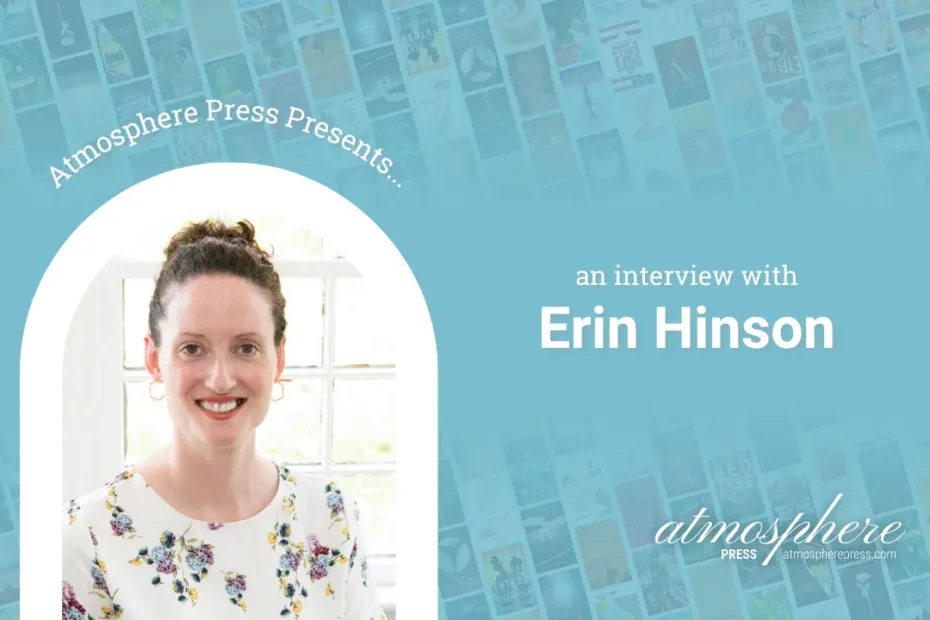
Erin Hinson (MA, PhD) is a researcher, educator, author, and tea enthusiast with almost two decades of experience in cultivating curiosity and understanding in herself and others. She believes empathy is a skill, not a superpower, that burnout is a cultural condition and not an individual failing, and that technology has fundamentally shifted our sense of belonging across and between generations.
She is one of The Good Doctors of Abbey Research and co-author (along with Kristen Nielsen Donnelly) of the multi-award winning, best-selling book The Culture of Burnout: Why Your Exhaustion Is Not Your Fault (2023) and the forthcoming book Leading Through The Culture Of Burnout (October 2026). She is passionate about international education and volunteers as the student support advisor for the Study USA program run by the British Council Northern Ireland. Erin lives in Pittsburgh with her mother, cat, and international gin collection.
Who/what made you want to write? Was there a particular person, or particular writers/works/art forms that influenced you?
If you count my teenage diaries and attempts at (bad) poetry, I’ve been writing since I was thirteen. However, pursuing graduate degrees means extensive training in research and writing. Effectively, my PhD was my first book.
My journey as a writer started with my passion for historical research. My first obsession with history came after I saw the movie JFK. Dating myself a bit, I remember looking through old newspaper headlines on the microfiche machine at my local library in order to determine whether I believed Kennedy’s assassination was a conspiracy. I’ve always been interested in stories, and both my PhD and MA were exercises in telling untold and overlooked stories. This all led directly into writing books with my best friend and business partner, Kristen Donnelly.
What inspired you to start writing this book?
Kristen and I knew we wanted to write a book. At the time (2022), we were focusing a lot of our teaching and training on empathy, so we started with that idea. One of our bigger sections of research for this book ended up being on burnout. I vividly remember Kristen saying to me, “You know, I don’t think we talk enough about the Puritans when we talk about American burnout culture.” As a sociologist of religion, she would know better than I the history of Puritanical theology in this country. The more we dug into these origins of burnout culture, the more we realized we had a story to tell about burnout that no one else was telling. And that’s what inspired us to write our first book, The Culture Of Burnout: Why Your Exhaustion Is Not Your Fault. What inspired us to write our second book, a companion to the first, was our work as trainers and educators. We spent two years traveling and working and listening to leaders who told us they didn’t have the time or the energy to read our (very well researched) 300-page book. So, we decided to distill it down into the core arguments about burnout culture, include more leadership-focused stories and tips, and include reflection questions at the end of each chapter. And voila, our second book was born.
Tell us the story of your book’s title. Was it easy to find, or did it take forever?
This title was particularly easy to come up with because we knew it needed to be a reflection of the first book but indicate that leadership was the driving focus. The biggest debate was whether we should say “leading through” or “leading in,” but that only took a day or two.
If your book had a soundtrack, what are some songs that would be on it?
Kristen and I are big Swifties, so the first songs that came to mind were this is me trying and The Man. To those songs, I would add Under Pressure by Queen and David Bowie, Be OK by Ingrid Michaelson, Graceless by The National, and because Kristen and I both love musicals, let’s say Non-Stop from Hamilton and Surface Pressure from Encanto (big Lin Manuel Miranda fans, if you couldn’t tell).
What books did you read (for research or comfort) throughout your writing process?
Kristen and I are HUGE romance readers for comfort, and specifically, I know I was reading Rachel Reid’s Heated Rivalry series during writing to give myself a brain break. One of our research staples was certainly Emily and Amelia Nagoski’s book Burnout: The Secret to Unlocking the Stress Cycle.
What advice would you give your past self at the start of your writing journey?
I tend to be a bit of a perfectionist with my writing, which can hinder the process for sure. I would tell my past self not to worry about making it perfect. One of the best pieces of advice I got during my PhD was, “If you have nothing written down, you have nothing to work with.” Everything is a draft and is changeable and fixable, you just have to start writing and give yourself the grace to make a boatload of mistakes along the way.
What’s one thing you hope sticks with readers after they finish your book?
We hope that readers understand that their burnout (or the burnout of the people they lead) is not their fault. It is a deeply ingrained cultural problem that requires cultural, not individual, solutions. We hope people understand that there is not one, quick-fix solution to burnout that you can buy off an Instagram ad. And we hope that readers will feel equipped to handle their own burnout, or the burnout of those they lead and manage, with empathy, care, and compassion.
Are you a writer, too? Submit your manuscript to Atmosphere Press.
Atmosphere Press is a selective hybrid publisher founded in 2015 on the principles of Honesty, Transparency, Professionalism, Kindness, and Making Your Book Awesome. Our books have won dozens of awards and sold tens of thousands of copies. If you’re interested in learning more, or seeking publication for your own work, please explore the links below.