An Interview with Linda Summersea
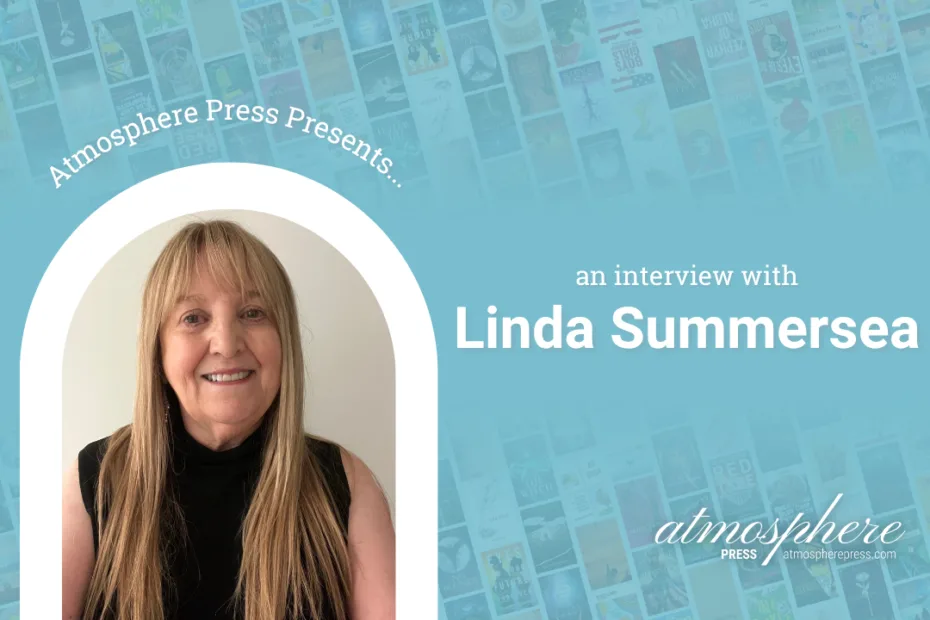
Linda Summersea survived a New England farm childhood that gave her very little and asked for everything. She spent decades teaching youth-at-risk in classrooms, not yet knowing she had been one herself. Then, at sixty-seven, an age when most people slow down, she discovered her passion for expedition hiking by walking fifty miles in the Moroccan desert with Berber nomads. Her exploration across uncharted terrain led to Kazakhstan, Siberia, Mongolia, and Jordan because survival, it turns out, was just the beginning. The Girl with the Black and Blue Doll is where it all started.
Summersea has BFA and MFA from University of Massachusetts, Amherst MA. She spent her career as a teacher and arts administrator working with youth-at-risk in Arkansas and Massachusetts, leading residencies in schools and museums without realizing that she, too, had been a youth-at-risk.
She produced and hosted ArtBreak, an award-winning program on Community Access TV. She began writing with NPR’s “Tales from the South,” and her work was further published in online periodicals. Summersea produced A Vietnam War Story, a radio program for the fiftieth anniversary of the end of the Vietnam War, to honor her husband, a one hundred percent disabled Vietnam Vet, with music heard in Vietnam base camps interspersed with her husband’s memories on ’Nam. KVSH-LP 101.9 FM Voice of Vashon, WA.
Who/what made you want to write? Was there a particular person, or particular writers/works/art forms that influenced you?
I always enjoyed writing, but it was the encouragement of my ninth-grade English teacher that propelled me to do more.
What inspired you to start writing this book?
I was listening to an NPR interview with Frank McCourt, speaking about his memoir Angela’s Ashes. McCourt and I had a lot in common. He grew up in a poor family in Ireland. My background was not as dirt poor as his, but lower income, nonetheless. McCourt moved to New York City for a long career as a teacher. But when I heard him say that he had published his memoir at fifty-seven, I felt a sense of relief that it wasn’t too late for me. I began writing my memoir ten years later while still teaching, and after eight drafts and a complete development edit, I published at seventy-five.
Tell us the story of your book’s title. Was it easy to find, or did it take forever?
The Girl with the Black and Blue Doll title describes the following. I got a lot of bruises while growing up. It was corporal punishment at home or school. It was the usual bumps and bruises from traipsing all over the farm—falling out of trees and off stone walls, jumping out of the hayloft, etc. When I got a bruise or a bee sting, I pulled a black magic marker from our kitchen junk drawer and gave my Betsy Wetsy doll a mark to match my own bruise—as a mark of solidarity.
If your book had a soundtrack, what are some songs that would be on it?
I do have a soundtrack on Spotify. It has ninety-one popular songs that played on the big oak radio in our kitchen and on our record player between 1953 and 1972, the years my memoir spans.
What other professions have you worked in? What’s something about you that your readers wouldn’t know?
What’s something about you that your readers wouldn’t know? Ha! That I am now enduring the worst “event” of my life. A devastating betrayal by a family member that has left me starting life again in my seventies, all alone. I lost everything and had to flee to a new location. I don’t know if I’ll ever see my disabled husband of fifty-one years again … LOL. You shouldn’t have asked this question. My response has spilled out, as happens when one is suffering.
What advice would you give your past self at the start of your writing journey?
You can do it. You have the resilience to survive.
What’s one thing you hope sticks with readers after they finish your book?
Resilience is stronger than circumstance, and we all have more resilience than we know.
Are you a writer, too? Submit your manuscript to Atmosphere Press.
Atmosphere Press is a selective hybrid publisher founded in 2015 on the principles of Honesty, Transparency, Professionalism, Kindness, and Making Your Book Awesome. Our books have won dozens of awards and sold tens of thousands of copies. If you’re interested in learning more, or seeking publication for your own work, please explore the links below.