Who/what made you want to write? Was there a particular person, or particular writers/works/art forms that influenced you?
Life made me want to write. It’s so precious, so fragile, and so damn impossible to capture. Words will never be enough, but I try anyway. I have to create from the beauty it gives us and the pain it throws at us. To honor our humanity. To do justice to my own complexity—the intensity that refuses to be subdued.
When the muse speaks, grief turns to ink. Worlds become words. And the universe breathes me.
What truly awakened my voice was a life-saving hysterectomy. That kind of pain unearthed a part of me I’d been silencing for years. The womb, it turns out, isn’t just for creating life—it’s where we carry longing. Vitality. That old, creative fire.
Connecting to it so viscerally let me tap into something primal. That loss gave me permission to take up space without shame. It’s strange how losing such a sacred part of the body can make you feel more whole. What was removed made space for something new to be born—a sense of ownership I hadn’t felt in years. A looser, less apologetic me, finally ready to be heard. From that place, I didn’t just write. I began to sing. Every forgotten child-part flared back to life. And now, I could never go back. I could never not create.
What other professions have you worked in? What’s something about you that your readers wouldn’t know?
Before I veered off into writing about the ineffable, I worked in advertising as an account manager for Apple. I’d just finished university, and it was the era when Steve Jobs launched the very first iPhone. It literally felt like we were part of a slick revolution.
One night, we were working late on a campaign, and the account director—whose entire job was to communicate with Steve Jobs—couldn’t get his email to work. So the holy grail of digital errands fell to me: a twenty-something, overcaffeinated wreck who hoped she could pass as a geek, despite knowing nothing about gadgets, code, or anything remotely techy.
Now, this was Apple. Everything had to be clean. Minimal. Divine. The design gods demanded absurd balance, endless whitespace, and typographic transcendence.
I, however, managed to send an email where the formatting exploded like a firework inside a Word document. The fonts were wrong. The spacing was deranged. Everything was inexplicably aligned to the right. I still have no idea how I managed that on a Mac—that sleek, allegedly idiot-proof slab of aluminium. But I did. I blew my one chance to write to Steve Jobs, whom we all feared slightly before revering devoutly.
Somehow, I wasn’t fired. But it was close. At the time, it seemed like the greatest tragedy of my short professional life. I mean—you get one chance to write to Steve Jobs… and you send him a message that looks like it was processed through a haunted 1960s fax machine.
He didn’t reply, of course. But I like to think he saw it, sighed deeply, and assumed his MacBook was glitching for the first and only time in history. As for me, that was the first real blow my perfectionist self took. And it was needed.
What was the most rewarding/meaningful part of publishing your book?
Knowing that I’ve done it. That there was something I needed to say, and I didn’t keep it locked inside. That despite the effort, the doubt, and the endless perfectionist spirals, I kept going. And it changed me, not for where it got me, but for how it asked me to show up, again and again, when no one was watching.
So if there’s something inside you asking to be heard, I hope you listen. Not for a book deal. Not for anyone’s approval. But because the world could always use a little more truth.
Especially yours.
If your book had a soundtrack, what are some songs that would be on it?
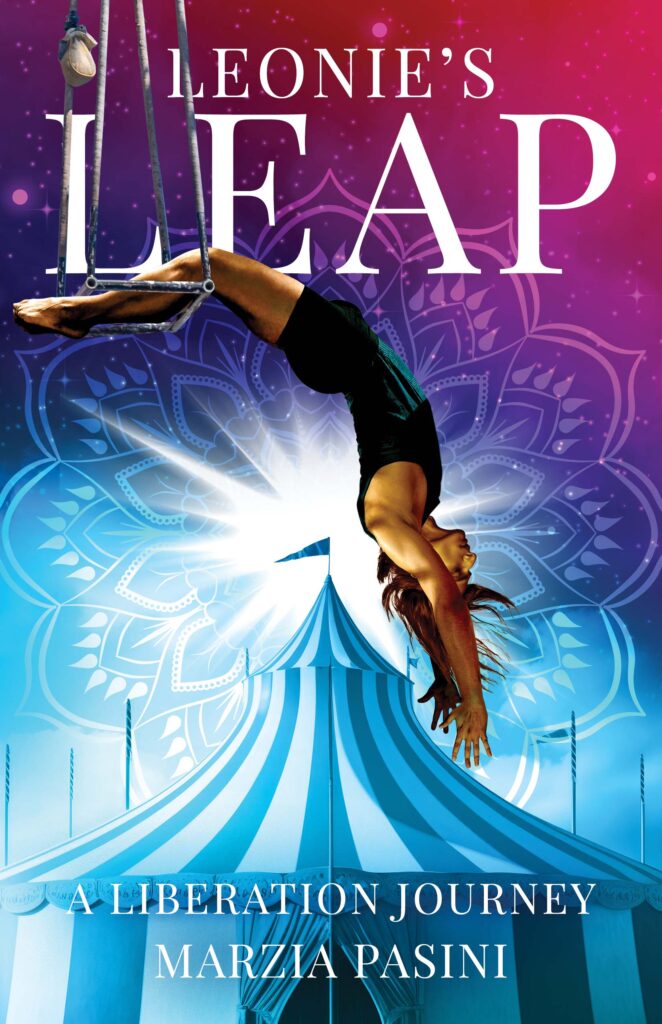
Definitely “Come Alive” from The Greatest Showman. It captures that moment when the characters realize they’ve been surviving instead of truly living. That shift—from numb to awake, from guarded to open—is a huge part of Leonie’s Leap’s emotional arc. It’s about finding the courage to feel again, even when it’s terrifying. And also…it has an outrageously good beat.
I’d also include “Home” by Dotan, because the book is really about the journey back—not just physically, but emotionally and spiritually. That quiet, aching kind of homecoming.
“Oceans” by Hillsong UNITED is another one I’d spill in there. The inner leap requires a kind of faith that takes us, as the lyrics say, “where feet may fail.” That song holds the surrender and trust that are at the heart of Leonie’s story.
And finally, Guru Dev Namo by Amrit Kirtan, because that chant is a return. It reminds us that we are the light, the teacher, the guide. It’s the soul remembering itself, which is really what this whole journey is about.
What is one thing you hope readers take away from reading your book? How do you envision your perfect reader?
That there is light in the dark, and that you are held—even when everything feels like it’s falling apart. Life can be unspeakably beautiful and unspeakably hard, often at the same time. My hope is that this book reminds people that even in the middle of the mess, something steady is holding them. That their pain isn’t proof they’re broken, it’s the sign they’re alive.
I’ve had to learn that firsthand. Living with a few medical mysteries—including a pair of benign brain tumors I now lovingly call bonbon bundles—has shown me a lot about grace and the unknown. It’s reshaped how I move through uncertainty, teaching me something about softening into what is. Like you, I don’t know what tomorrow will bring, but I’ve come to trust in the invisible hand. Not because I choose to believe in it, but because I’ve felt it.
My perfect reader? It’s the heart—a heart that feels deeply. One that’s been cracked open, maybe more than once. It might not yet have the words for what it’s moving through, but it’s looking for language that helps it breathe a little easier. It’s curious. Tender. Intense. And it’s never stopped knowing—deep down—that beauty and wonder still exist in the middle of it all.
What creative projects are you currently working on?
I’m currently writing a poetry collection about devotion and heartbreak. It’s an excavation of what it means to love deeply, to lose, and to keep showing up with an open heart. Alongside that, I’ve upgraded my under-the-shower singing repertoire and finally started taking lessons. It’s super fun! Recording an album is something I’ve dreamed about for years, and it feels like a natural extension of the writing: finding the courage to use my voice out loud in the way that feels most alive.
 An Interview with M. LaRose, author of Lost in the Hall of the Mountain King
 An Interview with Kara Jacobson, author of Lady Ghost
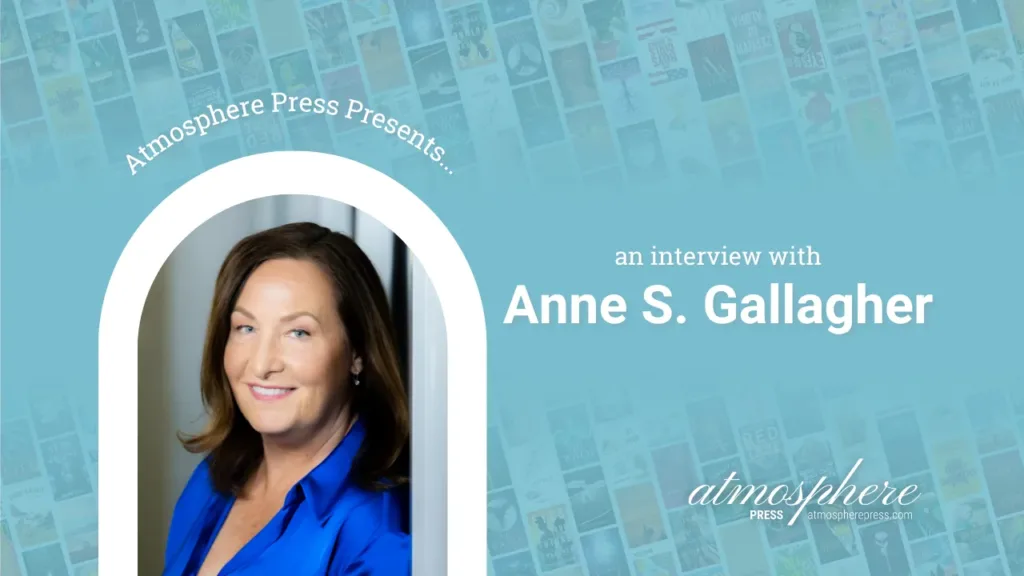 An Interview with Anne S. Gallagher
 An Interview with A. E. Jones