An Interview with Michelle Myers
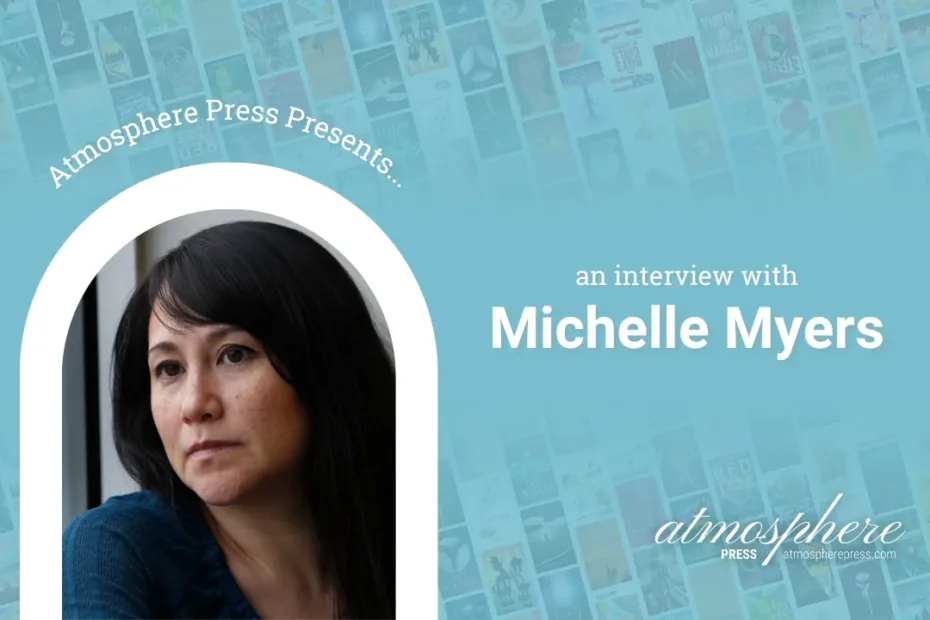
Michelle Myers is an award-winning poet, author, and educator whose work centers storytelling, cultural memory, and voice. A founding member of the Asian American spoken word poetry group Yellow Rage, she was among the first Asian American women featured on HBO’s Russell Simmons Presents Def Poetry. Her work appears in numerous anthologies and outlets, including USA Today, The Philadelphia Inquirer, and the Smithsonian Channel.
She received a 2024 Individual Artist Fellowship from the New Jersey State Council on the Arts for her middle-grade novel Talk Me a Story about Moon Rabbit and was commissioned by the Chinese American Museum in Los Angeles in 2025 to write a poem for its exhibition (Be) Spoken.
Michelle is also an award-winning educator and the faculty coordinator and co-creator of the Emmy-nominated series Drop the Mic. She hosts the podcast Mind Your Margins, produced by her daughter, Myong.
Tell us the story of your book’s title. Was it easy to find, or did it take forever?
The original title was actually “Shelly and Moon Rabbit,” but as the story developed, I realized I wanted Momma’s voice to be part of the book from the very moment a reader encounters it. The phrase “Talk Me a Story about Moon Rabbit!” comes from the way Shelly speaks, but she’s echoing something she hears from her mother, who says, “I want to talk you a story.” It’s a reflection of Momma’s voice and the influence of her first language, and I wanted to preserve that because it’s such an important part of who she is.
One of the things that sets Shelly’s journey in motion is that her classmates make fun of her mother’s accent. I wanted to turn that around and celebrate the very thing that others are making fun of. I think there are still so many ways in which children from immigrant families or different cultural backgrounds are made to feel ashamed of their parents’ accents, their languages, their food, and their traditions. Sometimes, children internalize those messages simply because, like all of us, they want to be accepted. They want to fit in. They want to belong.
So, while the title took some time to evolve, once I understood what I wanted it to communicate, it felt right. I wanted readers to encounter Momma’s voice before they even turned the first page. In a way, the title itself becomes an act of celebration and reclamation. It’s my way of saying that the things that make our families different are not things we should have to hide or apologize for. They’re part of our stories, and they’re worth celebrating.
How did it feel when you first saw your book cover? Or when you first held your book in your hands?
Seeing the cover for the first time was incredibly exciting, especially because I illustrated the book myself. There was something surreal about seeing my own artwork become the face of a book that I had spent so many years writing, revising, and bringing to life. It was one thing to see my illustrations on a computer screen or on individual pages, but seeing them come together on an actual book cover made everything feel real.
But when I finally held the book in my hands, I cried. I thought about all the time, energy, creativity, and, most importantly, love that I had poured into this project. It was almost like giving birth to something. You spend so much time nurturing an idea, watching it grow, worrying about it, and hoping that it will find its way into the world. And then suddenly, there it is in your hands.
But this book carries an even deeper meaning for me because I wrote it to honor my mother, who passed away in 2018. So, holding the book was also an emotional reminder of her and of the stories, traditions, and love that inspired me to write it in the first place. In many ways, creating this book has been a way of keeping my mother close to me. Although she’s no longer physically here, something of her lives in these pages. And being able to share that with other people, especially with my own children and future generations, means more to me than I can really put into words.
Who/what made you want to write? Was there a particular person, or particular writers/works/art forms that influenced you?
I’ve wanted to write novels since I was a little girl, so in many ways, writing Talk Me a Story about Moon Rabbit! was a dream that took a very long time to come to fruition. Growing up, I was an avid reader, and some of my biggest influences were detective and mystery writers. I loved Agatha Christie’s novels, as well as the Nancy Drew and Hardy Boys series. I was also drawn to fantasy and horror. I was a huge fan of Terry Brooks’ Shannara books and Stephen King’s novels as a teenager. I think those early reading experiences really nurtured my imagination and my desire to create worlds and characters of my own. I’d still love to write a mystery or horror novel someday!
But my journey as a writer has also been deeply shaped by poetry. As a spoken word poet, I’ve always written poems about my mother and our complicated relationship. In many ways, this book became an extension of that exploration, but it also took me somewhere I hadn’t anticipated. Writing it became a healing journey for me on so many levels.
One of the things I came to understand through writing this book is that just because someone we love is no longer physically here with us, it doesn’t mean our relationship with them ends. We continue to have relationships with the people we’ve lost through our memories, the stories we tell, the traditions we carry forward, and the ways they continue to shape who we are. And as we learn to forgive ourselves and those we love, even when they’re no longer here to have those conversations with us, we continue to evolve as human beings.
I think that’s what made this book so meaningful to write. What began as a story for young readers also became a way for me to revisit my own childhood, reconnect with my mother, and make peace with parts of our relationship. In the process, I discovered that storytelling can be a way of healing, not just for the person writing the story, but potentially for the people who read it, too.
What other professions have you worked in? What’s something about you that your readers wouldn’t know?
Although I wouldn’t exactly call it a profession, one of my first jobs was working in a pizza shop when I was in high school. And here’s something my readers might not know: I make a pretty mean cheesesteak and hoagie! So, if I ever decide to take a break from writing and illustrating, I have a backup career waiting for me.
What was the most rewarding/meaningful part of publishing your book?
Without a doubt, one of the most meaningful parts of publishing this book has been knowing that I’m leaving something behind for my children—a legacy they can carry with them and, hopefully, pass on to future generations.
My children were also my biggest cheerleaders throughout this entire journey. They were the ones who encouraged me to illustrate the book myself when I wasn’t sure I could do it. They encouraged me when I felt overwhelmed or wanted to give up. Having them believe in me, sometimes even when I wasn’t sure I believed in myself, meant everything.
But perhaps what’s most meaningful is that they now have a piece of their grandmother’s stories preserved in this book. As I mentioned, my mother passed away in 2018, and while my children have their own memories of her, this book gives them something tangible that they can hold onto. It allows them to revisit the stories, traditions, and cultural memories that connect them to her and to their Korean heritage.
And I love the idea that these stories won’t end with me or even with my children. They can be passed down through them to their own children and future generations. In that way, publishing this book feels like I’m doing more than fulfilling a lifelong dream. I’m helping to keep my mother’s voice and stories alive and giving my children something of their grandmother that they can carry forward. To me, that’s an incredibly meaningful legacy.
If your book had a soundtrack, what are some songs that would be on it?
“Arirang,” of course! It’s such an important part of my Korean heritage, and I’ve already woven it into the story itself. But if Talk Me a Story about Moon Rabbit! had a full soundtrack, all the other songs would be original compositions. Maybe that’s another creative project waiting to happen! Who knows? I might have to add songwriter to my list of creative pursuits!
What is one thing you hope readers take away from reading your book? How do you envision your perfect reader?
I hope readers come away understanding the importance of passing stories, memories, and traditions from one generation to the next. Storytelling is about so much more than preserving folktales or cultural traditions. It’s about passing down a sense of who we are, where we come from, and how we’re connected to the people who came before us.
In the novel, Momma’s stories give Shelly a connection to her Korean heritage and help her understand that she’s part of something much larger than herself. When Shelly begins to question the very things that make her different, those stories offer her another way of seeing herself—not as someone who should be ashamed of her heritage, but as someone whose family history is rich with meaning, wisdom, and possibility.
This is something deeply personal to me. When I became a mother, I made a conscious effort to share Korean folktales with my own children because I wanted them to have a connection to their cultural heritage. I believe that when we pass stories down, we’re giving the next generation more than memories. We’re giving them a foundation, a sense of belonging, and a way to understand who they are. And hopefully, they’ll carry those stories forward and pass them on to the generations that follow.
What creative projects are you currently working on?
So many! I have several book projects in the works, including a graphic novel and a sequel to Talk Me a Story about Moon Rabbit! I’m also continuing to develop the Black + Gold Artists Exchange, a collaborative project that brings Black and Asian American artists together to build community through art and creative exchange. I’m working on new episodes of my podcast, Mind Your Margins, and writing new poetry. There never seems to be a shortage of ideas—or projects—bouncing around in my head! I guess that’s what happens when you love creating in so many different forms.
How was working with Atmosphere Press? What would you tell other writers who want to publish?
I’ve had a really great experience working with Atmosphere Press! They have a wonderful team, and I’ve felt supported throughout the publishing process. My editor and project manager, Alex Kale, was always encouraging, responsive, and supportive. Even when I was feeling overwhelmed or stressed, she helped make things go more smoothly. Trista Edwards has also been wonderful to work with from the very beginning. What I appreciated most was feeling that everyone genuinely wanted the best for me and my book. My advice to other writers who want to publish is to do your homework! Take the time to understand the differences between traditional publishing, independent publishing, and hybrid publishing. Each path has its own advantages, challenges, and expectations. The more informed you are, the better equipped you’ll be to choose the publishing route that best aligns with your goals, needs, and vision for your book. Best of luck!
Are you a writer, too? Submit your manuscript to Atmosphere Press.
Atmosphere Press is a selective hybrid publisher founded in 2015 on the principles of Honesty, Transparency, Professionalism, Kindness, and Making Your Book Awesome. Our books have won dozens of awards and sold tens of thousands of copies. If you’re interested in learning more, or seeking publication for your own work, please explore the links below.