An Interview with Stephanie Simpson
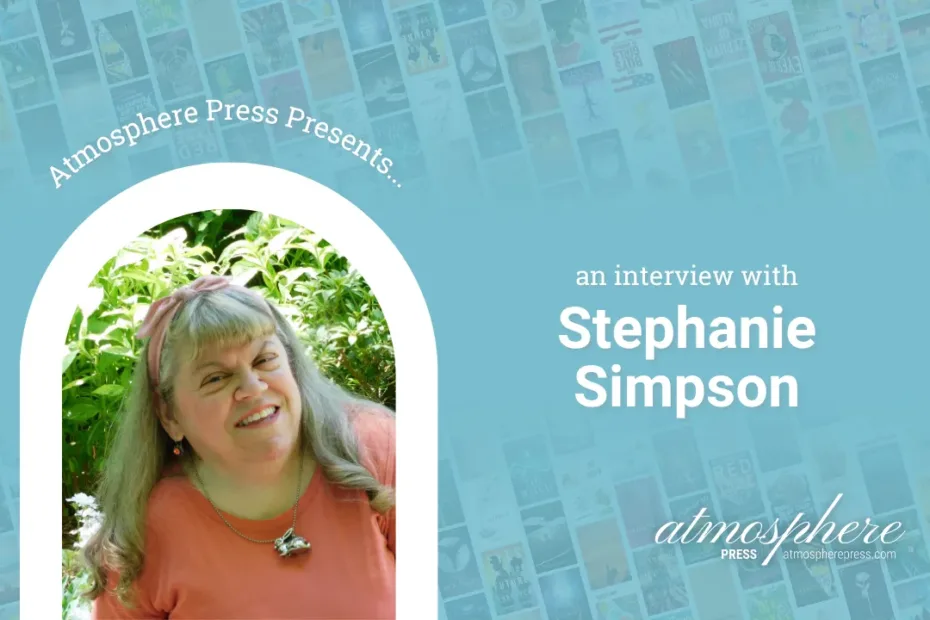
Stephanie Simpson is a retired psychotherapist living in southern Maine with her husband and ornery cat. She worked with military veterans and adult survivors of trauma for two decades in outpatient mental health clinics and in private practice. Later she trained as a master gardener in Maryland and Massachusetts, specializing in native plants and medicinal herbs. She owns a garden consultation business, Lake Gardengirl. Her happy places are The Scottish Borders and Northumberland, England, where her ancestors roamed with the Fraser clan as Border Reivers. The Alchemy From Antiquity is her first novel. She is currently working on the sequel.
Tell us the story of your book’s title. Was it easy to find, or did it take forever?
I first had an inkling of writing this story when I was moseying around a large library and realized that the Anglo Saxon period had a dearth of books about the time period about ordinary people struggling and even less about women from a woman’s point of view! There are several authors who write about this time period, but mostly about men: great, epic battles and warlords and kings and wrestling with power. While that certainly occurred then, what I found fascinating in my research was the majority of conflicts then were about rather everyday, petty skirmishes. Fights over bread ovens and land space for communal farming and grazing. Arguments between market vendors and fish mongers and metal smiths over selling spaces in the town or city square. I found it fascinating that people then probably lived lives in some way that weren’t too different than our own, minus the technological changes of our era. I had always had a fascination about the history of London and had devoured the book Londinium, about the history of the city going back to pre-Roman times. There was the usual lack of information about the early Anglo Saxon period after the Romans left Britannia, but what I found fascinating is the disagreement about what happened to the city after the Romans left it in 410 AD. A few historians had believed the entire city became abandoned and shut down but more of them believed the city became derelict and crime-filled as the Roman infrastructure of commerce and money and a strong economy left it … But it still survived and thrived on a much smaller scale. What would that place look like in the mid-sixth century? A time period about which few research is gathered and even fewer people know about. I began to imagine a ragtag city that was filled with crime and past ruins and crumbling buildings and weeds and rats everywhere. I also saw a vibrant market place where vendors competed with each other while at the same time raiders and emigrants and refugees were pouring into this area from places across the English Channel like Saxony. What would all of that look like? How would ordinary people live in such a place? What was the status of women then, during this time period where Christianity was not yet codified into law as what happened after 1066 during the Norman Conquest? Some of the descendants of the Romans were still there; not all of them had left in 410 AD. Marcus Aurelius has been one of my favorite ancient writers and his Meditations book has been a reference for me personally and in my past career as a therapist. What would it look like if his descendant created an army of peacekeeping campaigns that attempted to unite the island, not separate it thru invasions and wars? The King Arthur tales of the same time period tell a similar story of peacekeeping and unification, but what if that also happened in other areas of Brittania then? Told from the point view of ordinary people. Women and men. Not kings and not warlords fighting huge epic battles. When these thoughts all came together over two years ago, I knew I had a story! A story of trauma of ordinary people. Of women and their struggle managing a world where assault and violence and being enslaved was common but still allowed opportunities for them to become skilled midwives, surgeons, and farmers and herbalists and market vendors competing alongside men. My research on women surgeons took me on a fascinating turn to study Metrodora, an either Greek or Egyptian physician and writer who probably lived right in the sixth century. Her celebrated papers on women’s healthcare including contraception and childbirth and aphrodisiacs and women’s diseases are still available for us to read. Where there were still pockets of indigenous native people living in mysterious, remote areas in Britannia where women were hunters and fighters alongside men. My research on the Picts asked more questions about that rather than answering them. Where Celtic tribes like the Votadini were assimilated through the centuries by the Romans, post-Romano Britons and Saxons to become soldiers and generals and scribes and writers and religious clergy, thus moving up a career ladder of success. At some point, it became important to start a story about all of this information and because the story is part of a larger time period of transition, I decided to make it a coming of age book from a woman’s point of view but also with foreshadowing and storytelling from several key male protagonists. Crafting a story that ordinary people would enjoy because it would speak to them about ordinary people during a time period that was anything but ordinary. My trips to Scotland and Northumberland in the past fueled my imagination for the story. My ancestry is Scottish from the Scottish borders and Northumberland of northern England so these were key places in my book. The Simpson clan united with the Fraser clan and were border reivers (raiders) in those areas during the seventeenth and eighteenth centuries. Tracing the steps of my ancestors led me to think of who lived here centuries before that which led me to the research of the Votadini tribe, which is the ancestry of my male protagonist Stephan.
How did it feel when you first saw your book cover? Or when you first held your book in your hands?
One of disbelief at first! It was a rather surreal moment. I had just come back from a three-week trip from Scotland and Northumberland for research and vacation time and I felt that energy tingle through my hands once again as I held my book for the first time! The inside pages had such an Anglo Saxon feel to it, along with my cover that included my hare pendant on it that plays a recurrent key role in the magical realism of the story. To say I was thrilled is an understatement!
Who/what made you want to write? Was there a particular person, or particular writers/works/art forms that influenced you?
I have been a writer since childhood. When I was eight to ten, I used to amuse myself with stories of girls and animal friends of hers … I only once showed them to a teacher who praised them but never made them public. A childhood author who has inspired me is Laura Ingalls Wilder, who wrote the childhood series of her life on the American frontier during the late nineteenth century. Writers I have admired as an adult include Marion Zimmer Bradley, who wrote The Mysts of Avalon, Alice Hoffman, who writes brilliant, shimmering fiction stories with plenty of lovely magical realism. The amazing Welsh historical fiction writer Ken Follett, who has crafted so many believable stories of ordinary people during extraordinary historical times in England that he seems to have invented a powerful, engaging template for doing it, has influenced me greatly. His inspiration and meticulous attention to historical detail coupled with the human characterization of his protagonists followed me all through the writing of The Alchemy From Antiquity.
What other professions have you worked in? What’s something about you that your readers wouldn’t know?
I am a retired therapist who worked with trauma survivors in outpatient clinics and in private practice for two decades. This work brought me to a place where I felt skilled enough to write about trauma during an era where much of it wasn’t known yet.
What was the most rewarding/meaningful part of publishing your book?
Working with my developmental editor! I could have had another six months working closely with her. Her advice was invaluable to me. Another part was all the people who helped make this book a success in getting it published. Their professionalism and attention to detail and great communication was outstanding and I appreciated their hand holding throughout the process. The spectacular creators of interior design made my manuscript go from ordinary to amazing. Their artistic designs of the Anglo Saxon period was inscribed throughout the chapters and the maps in beautiful ways I could not have done myself.
If your book had a soundtrack, what are some songs that would be on it?
The entire soundtrack of Quest For the Runestone by David Arkenstone, along with several selections from Enya like “The Loxian Gate.” These were played during my writing and the CDs/songs are listed on my book website: www.alchemyfromantiquity.com
What is one thing you hope readers take away from reading your book? How do you envision your perfect reader?
I hope most of all that people learn tolerance about those who frighten them and appear different from them … Expanding ethno-centrism ethics … Ancient people in Britannia wrestled with these feelings as they encountered the Picts and Saxons and each other as Celts and Romano Britons. My perfect reader would be one who has a love of Anglo Saxon history with a deeply passionate view of the ancient wisdom of feminism according to the struggles of ordinary ancient women, along with those who love the art and philosophy of Marcus Aurelius Stoicism and how this can be applied to non-violent confrontations that we still struggle with today. The subject matter of psychological trauma as it was handled during this time period should interest those working in the mental and physical healthcare fields.
What creative projects are you currently working on?
I’m working on the sequel to The Alchemy From Antiquity.
How was working with Atmosphere Press? What would you tell other writers who want to publish?
The experience was fantastic! I enjoyed every minute of it. I would recommend them 100 percent. Their ethics as a publisher are outstanding and exceeded my expectations. They are especially good for indie writers such as myself. Don’t hesitate to work with them as a newbie writer.
Are you a writer, too? Submit your manuscript to Atmosphere Press.
Atmosphere Press is a selective hybrid publisher founded in 2015 on the principles of Honesty, Transparency, Professionalism, Kindness, and Making Your Book Awesome. Our books have won dozens of awards and sold tens of thousands of copies. If you’re interested in learning more, or seeking publication for your own work, please explore the links below.